Research Article | | Peer-Reviewed

Influence of Palm Kernel Shell/Wood Dust on Mechanical Properties with Epoxy Resin Composites

Received: 1 May 2025     Accepted: 12 May 2025     Published: 26 June 2025
Views:       Downloads:
Abstract

The enormous quantity of palm kernel shell (PKS) and wood dust released in the environment as byproduct of wood processing and oil processing respectively, poses a major threat to the environment through land, water and air pollution during the local waste handling methods of dumping and burning of these byproducts. This study aimed at investigates the influence of waste palm kernel shell/wood dust with epoxy resin. Physical properties of PKS and wood dust, chemical compositions of wood dust and mechanical characterization of it composites were carried out. Palm kernel shell were pretreated with hot distill water at 1000C with 5% sodium Hydroxide (NAOH) to eliminate impurities and then sun dried it for 4 days. The physical properties of PKS and wood dust; moisture content, apparent density, specific gravity and grain size distribution and PKS equivalent test were conducted. Chemical properties such as cellulose, lignin, pectin, hemicellulose contents for wood dust were investigated. Three different sample composition of twelve each was moulded with 40% of epoxy resin and PKS/wood dust content of 20/40, 25/35 and 30/30. Compressive strength, flexural strength, impact test and Water absorption rate were determined. It was observed that the PKS/wood dust that the averages of moisture content, apparent density, specific gravity and fineness modulus were 14.89%/25.27%, 0.72 gmL-3/0.21 gmL-3, 1.323/1.28 and 58.4/33.29 respectively with average PKS equivalent of 80.4%. The results showed that the compressive strength, flexural strength and impact strength were 11.58-15.77 MPa, 8.03-10.99 MPa and 249-258×〖10〗^6 KJ/m^2 respectively and water absorption was 13.22-64.79%. The minimum strength was observed at 20/40 while the maximum strength was observed at 30/30 content. PKS/wood dust with epoxy resin composite can promote the use local materials in building construction as wall tiles.

Published in Composite Materials (Volume 9, Issue 1)
DOI 10.11648/j.cm.20250901.13
Page(s) 28-45
Creative Commons

This is an Open Access article, distributed under the terms of the Creative Commons Attribution 4.0 International License (http://creativecommons.org/licenses/by/4.0/), which permits unrestricted use, distribution and reproduction in any medium or format, provided the original work is properly cited.

Copyright

Copyright © The Author(s), 2025. Published by Science Publishing Group

Keywords

Compressive Strength, Flexural Strength, Epoxy Resin, Palm Kernel Shell/Wood Dust

1. Introduction
The growing demand for sustainable and eco-friendly materials has driven significant interest in the development of polymer composites reinforced with natural fillers. These materials offer an alternative to conventional composites by leveraging the inherent properties of natural resources, often resulting in reduced environmental impact and cost. Among the diverse range of fillers available, palm kernel shell (PKS) and wood dust (WD) have emerged as promising candidates due to their abundance, biodegradability, and favorable mechanical properties. Epoxy resin, a widely used thermosetting polymer, exhibits excellent mechanical strength, chemical resistance, and adhesive properties, making it a preferred matrix material in composite applications. However, its brittleness and dependence on petroleum-derived resources necessitate the integration of fillers that can enhance its mechanical performance while promoting sustainability. The incorporation of PKS and WD into epoxy resin matrices presents an opportunity to improve the material's strength, stiffness, and toughness, while also reducing its environmental footprint.
Natural fibers, including agricultural by-products, have been widely studied as alternatives to synthetic fibers (e.g., glass and carbon fibers) due to their environmental benefits. Natural fiber composites exhibit good specific strength, low density, and reduced tool wear during machining . However, challenges such as poor fiber-matrix adhesion and moisture absorption must be addressed through chemical treatments. Palm kernel shell PKS is an agricultural waste product from palm oil processing industry, characterized by high lignocellulosic content, low density, and excellent mechanical properties. PKS-reinforced composites has demonstrated its potential to enhance the tensile strength, flexural modulus, and impact resistance of polymer matrices. Incorporating PKS in epoxy resin improved the composite's load-bearing capacity and stiffness while reducing weight while PKS-filled composites exhibited better thermal stability and lower water absorption compared to unfilled resins . Studies have shown that PKS can be used as a filler or reinforcement in polymer composites due to its high lignin content, which enhances stiffness. PKS-reinforced polyester composites was investigated and reported that it improved hardness and wear resistance. Similarly , It was found that PKS particles enhanced the compressive strength of epoxy composites when used at optimal loading levels (10–30 wt%) . The annual world production of palm kernel shell amounts to about 21,359,000 tons, about 270,000 tons for Cameroon . Wood dust (WD) is another abundant and renewable filler derived from sawmill and wood-processing activities. Its fine particle size, coupled with the presence of cellulose and lignin, makes it a versatile reinforcement material. WD enhances the tensile and flexural properties of epoxy composites, although excessive filler loading can lead to agglomeration and reduced ductility . It was demonstrated that the potential of surface-treated WD to improve filler-matrix adhesion, leading to better stress transfer and mechanical performance . Wood dust, a by-product of wood processing industries, has been incorporated into polymer matrices to improve mechanical properties. The WD-reinforced polypropylene composites exhibited improved tensile and flexural strength at fiber loadings up to 40%. However, excessive filler content led to agglomeration and reduced mechanical performance . Cameroon has the second largest forest in the sub-Saharan Africa and the East region of Cameroon produces about 1.5-million m3 of forest residues annually. Only 20,000 m3 are recovered to produce 600 tons of charcoal per year, much of the scraps are burned in forest side and others abandoned in sawmills .
The combination of multiple natural fillers, such as PKS and WD, offers synergistic effects, balancing mechanical properties and minimizing filler-related drawbacks. Studies have shown that hybrid fillers can optimize tensile, flexural, and impact properties while maintaining lightweight characteristics. Hybrid PKS-WD composites was investigated and reported enhanced flexural strength and toughness compared to single-filler systems . The importance of filler compatibility and dispersion in achieving optimal performance in hybrid composite was highlighted . Hybrid composites, which combine two or more reinforcements, often exhibit synergistic effects that enhance mechanical properties. The hybrid PKS/coconut shell epoxy composites was studied and observed improved impact strength compared to single-filler composites. Similarly , It was also reported that a hybrid of PKS and WD in epoxy resin enhanced flexural strength due to better stress distribution between the fillers . The effectiveness of natural fillers is significantly influenced by their compatibility with the polymer matrix. Surface treatments, such as silane coupling agents, alkali treatment, or acetylation, have been widely adopted to improve filler-matrix bonding. The alkali-treatment of PKS fillers exhibit improved wettability and mechanical interlocking with epoxy resin . The chemically treated WD enhances the composite's tensile strength and reduces moisture sensitivity .
The mechanical performance of composites reinforced with PKS and WD depends on factors such as filler loading, particle size, and distribution. The optimal filler content is critical to maximizing tensile and flexural properties, as excessive filler loading may cause agglomeration and weaken the composite structure . The smaller particle sizes and uniform dispersion lead to improved stress transfer and enhanced mechanical performance where flexural strength indicates resistance to bending . It was demonstrated that natural fiber composites with proper fiber-matrix bonding exhibit high flexural strength . A 20% PKS/WD hybrid in epoxy resin provided optimal flexural performance due to uniform dispersion . Impact resistance is crucial for dynamic load applications. The PKS-reinforced composites showed higher impact strength than pure epoxy due to energy absorption by the fibrous structure . WD composites exhibit moderate impact resistance, which can be improved through hybridization . Compressive strength is crucial for load-bearing applications. PKS particles (20–30 wt%) improved compressive strength in epoxy composites due to their rigid structure . WD-reinforced composites exhibited moderate compressive strength, with optimal performance at 25% filler loading. Hybrid composites (PKS/WD) may balance stiffness and toughness . Water absorption is a major concern for natural fiber composites due to their hydrophilic nature. Untreated PKS absorbs more water, but chemical treatments (e.g., NaOH) reduce moisture uptake . Wood dust increases water absorption, but silane treatment improves hydrophobicity . Hybrid PKS/WD-epoxy composites had lower water absorption than single-filler systems due to better fiber-matrix adhesion. This demonstrates that PKS and WD are promising reinforcements for epoxy resin composites, offering improvements in mechanical properties while promoting sustainability . However, the interaction between these fillers and the epoxy matrix, as well as the influence of hybrid filler systems, requires further investigation. This study aims to bridge these gaps by exploring the combined effects of PKS and WD on the mechanical properties of epoxy resin composites, with a focus on optimizing their performance for practical applications.
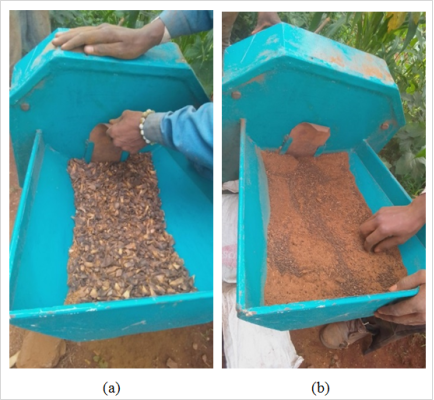
Figure 1. Crushing of PKS (a) First pass (b) Second pass
Figure 2. a) Pretreatment of PKS b) Oven dried and sieved PKS.
2. Materials and Method
2.1. Pre-treatment of Palm Kernel Shell
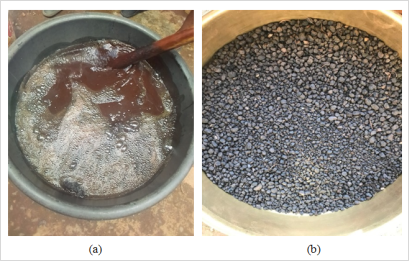
Palm kernel shell (dura species) was gotten after the oil production process and sun dried for 5 days before cracking of the palm nuts using a palm kernel mill in Bambalang, a village in the North West Region of Cameroon. The crushing of PKS was done twice as presented in Figure 1(a) and (b). The PKS was washed in hot distilled water at 100 °C diluted with 5% NaOH concentration for 20 minutes and furnace dried at a temperature of 105°C for 24 h as presented in Figure 2 (a) and (b).
Wood dust was gotten from the milling of Bilinga wood by the Timber exploitation company in the Douala Bassa Industrial zone in the Littoral Region of Cameroon.
The physical properties of PKS and wood dust were carried out in GEOSTRUCT Laboratory, mile 4 Bamenda, North West Region of Cameroon.
2.1.1. Moisture Content of PKS and Wood Dust
ASTM D 2216-98 - Standard Test Method for Laboratory Determination of Water (Moisture) Content of Soil, Rock, and Soil-Aggregate Mixtures was used to determine the moisture content of PKS and Wood dust . Two pairs of empty moisture cans each were labelled, Yp, Yw and Ap, Aw their masses recorded and denoted MC. Small quantity of PKS and Wood dust was put in Yp, Yw and Ap, Aw respectively. The masses of the moisture cans containing PKS and Wood dust were determined, recorded and denoted MCMS. The cans containing PKS and wood dust were placed in an oven at a temperature of 1050C for 24 hours. These cans were allowed to cool to room temperature and the masses were again determined, recorded and denoted MCDS. The cans were then emptied, cleaned and moisture content of PKS and Wood dust were determined as presented in Table 1.
Table 1. PKS AND Wood dust Moisture content.

Can Name/Number

Yp

Ap

Yw

Aw

Mass of empty Moisture can, MC / g

23.9

23

23.4

23.9

Mass of can, and PKS/wood dust before drying, MCMS /g

93.9

102.6

47.1

45.8

Mass of can, and PKS/wood dust before after drying, MCDS /g

84.3

92.9

43.3

41.4

Mass of water, Mw=MCMS - MCDS /g

9.6

9.7

4.8

4.4

Mass of dry PKS, Md= MCDS - MC /g

60.4

69.9

18.9

17.5

Moisture content, w=(MwMd)(100)

15.9

13.88

25.4

25.14

Average moisture content/%

14.89

25.27

2.1.2. Apparent Density of PKS and Wood Dust
ASTM D 4254 –00 Standard Test Methods for Minimum Index Density and Unit Weight of Soils and Calculation of Relative Density was used to determine the apparent density of PKS and Wood dust . An empty 3L standard metallic cylindrical container (mould) was used. The mass of the cylinder (mould) was determined and recorded. PKS and Wood dust were put in a different container and at a height of 0.3 m, a free-fall filling of the 3L cylindrical container (mould) was done till PKS and Wood dust were really full in the 3L container (mould). Using a spatula, the PKS and Wood dust were trimmed to take the same level of the 3L container. The mass of the 3L container and the trimmed PKS and Wood dust were then measured and recorded. The 3L container was then emptied and the previous step repeated for two more times, values recorded and determined as presented in Table 2.
Table 2. Apparent density of PKS and Wood dust.

Test S/N

Plam Kernel Shell (PKS)

Wood dust

1st

2nd

3rd

1st

2nd

3rd

Mass of material +mould /g

2785.6

2776.3

2767.6

1253.2

1238.8

1244.2

Weight of mould /g

622.5

622.5

622.5

622.5

622.5

622.5

Volume of mould

3000mL

3000mL

3000mL

3000mL

3000mL

3000mL

Mass of Material /g

2163.1

2153.8

2145.1

630.7

616.3

621.9

Apparent density /gmL-3

0.721

0.718

0.715

0.210

0.205

0.207

Average apparent density /gmL-3

0.718

0.21

2.1.3. Specific Gravity of PKS and Wood Dust
ASTM D 854-02 – Standard Test for Specific Gravity of Soil Solids by Water Picno was used to determine the specific gravity of PKS and Wood dust . Two pairs of empty picnos each were labelled P1p, P1w and P2p, P2w and their masses were determined and recorded. The picnos were filled with distilled water up to the 250mL mark and their masses were determined and recorded. The picnos were emptied and using a funnel, 100g of PKS and Wood dust was measured into the P1p, P1w and P2p, P2w. Distilled water was then filled into P1p, P1w and P2p, P2w until the samples were completely covered. The samples were allowed for 24 hours before decanted to 250mL mark. The masses were determined and recorded as presented in Table 3.
Table 3. Specific gravity of PKS and Wood dust.

S/N

DESIGNATION

PICNO NUMER (PKS)

PICNO NUMER (Wood dust)

P1p

P2p

P1w

P2w

1

Weight of Picno + water

307.8

306.7

1500.3

1504.3

2

Weight of Picno

67.3

67.8

512.2

521.8

3

Weight of water= 1-2

240.5

238.9

988.1

982.5

4

Temperature

250C

250C

250C

250C

5

Density of water at T0C

0.997

0.997

0.997

0.997

6

Volume of Picno= 3/5

241.22

238.72

991.07

985.5

7

Weight of Picno + PKS/Wood dust

167.3

167.8

612.2

621.8

8

Weight of PKS/Wood dust = 7-2

100

100

100

100

9

Total weight=1+8

407.8

406.7

1600.3

1604.3

10

Weight of Picno + PKS/Wood dust + Water

331.9

331.8

1521.5

331.8

11

Weight of water displaced=9-10

75.9

74.9

75.9

1526.7

12

Temperature

250C

250C

250C

250C

13

Density of water at T0C

0.997

0.997

0.997

0.997

14

Volume of PKS/Wood dust =11/13

76.1

75.1

79.03

77.8

15

Specific gravity=8/14

1.314

1.332

1.27

1.29

16

Average Specific gravity

1.323

1.28

2.1.4. Grain Size Analysis of PKS and Wood Dust
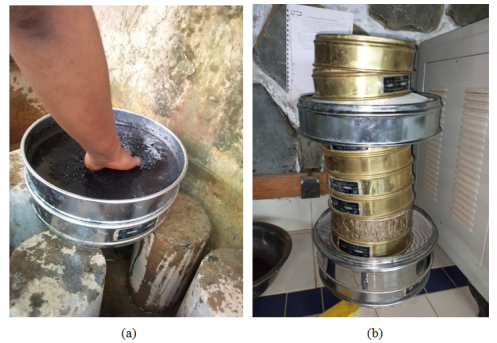
ASTM D 422 -63 Standard Test Method for Particle-Size Analysis of Soils was used to determine the grain size analysis of PKS and Wood dust . Using a scale balance a dish was placed on the balance and tared. 1000.1g of PKS and Wood dust were measured, recorded and denoted HW. Using a standard sieve 0.075 mm, the measured PKS and Wood dust were transferred into it and wet washed carefully until the water draining out of the sieve was clean Figure 3(a). The wet washed PKS and Wood dust were carefully transferred to a silver dish and placed in the oven for 24 hours for drying at 1050C. After 24 hours the sample were carefully removed from the oven. The sample was allowed to cool to room temperature. Sets of standard sieves were used to sieve the PKS and Wood dust ranging from 0.08 mm to 6.3 mm Figure 3(b) and the balance was used to measure their masses retained in every sieve. Using the moisture content determined earlier, the mass of the dry PKS and Wood dust were calculated.
Weight of dry sample, Wd = HW1+MC100
Where: HW = Mass of PKS not put in oven, 1000g
MC = Moisture content, 14.9%
2.1.5. Equivalent Test of PKS
ASTM D 2419: Standard Test Method for Sand Equivalent value of soils and fine aggregate was used to carry out the PKS Equivalent test . A reasonable quantity of PKS was placed in a measuring cylinder and water was added to completely cover the sample in the measuring cylinder. It was allowed to sit for 10 minutes. Hand shaking of the measuring cylinder was done 90 times in a horizontal linear motion which took 6 minutes to complete the shaking. The measuring cylinder with sample was again allowed to sit for 20 minutes. Overall height of sample was read visually in the measuring cylinder and value recorded. The height of the clean region (considered as the PKS height) was read and value recorded. A weighted foot assembly was inserted into the cylinder until the foot came to rest on the PKS. The indicator mark on the weighted foot assembly was then read. All the above PKS equivalent test procedure was repeated for another test denoted test 2 and values recorded as presented in Table 4.
Figure 3. (a) Wet washing of Sample (b) Set of sieves used.
Table 4. Equivalent test of PKS.

Measuring Cylinder number

01

02

Initial start time (T0)

12: 37

13: 00

Agitation at the end of the wash (T1=T0+10)

12: 47

13: 10

Start of flocculation (T2)

12: 53

13: 17

Measure in time ()

13: 13

13: 37

Total height

H1

mm

25.5

19

Height of PKS in view

H2’

mm

23.5

17.1

Height of PKS with piston

H2

mm

20.5

15.3

Equivalent visual of PKS

EpksV

=100×H2'H1

92.1

90

Average

91

Equivalent of piston(weighted foot assembly) PKS

Epks

=100×H2H1

80.4

80.5

Average

80.4

2.2. Determination of Chemical Properties of Wood Dust
2.2.1. De-Waxing
Maceration: 150g of sawdust was measured using an electronic balance and placed in a bowl. 75mls of 96% ethanol was measured and put in the bowl making sure that all the sawdust was soaked. The bowl was sealed and shaken vigorously to make sure the ethanol penetrated the sample. After 24hours, the sample was removed from ethanol and filtered using a filter paper. The extract was then taken for soxhlet extraction process.
Soxhlet Process: The particle was placed in a thimble made of filter paper. The thimble containing the sawdust was then placed in a soxhlet extractor, which is a close glass apparatus consisting of a boiling flask, a reflux condenser and a siphon that connects the boiling flask and the condenser. Ethanol was added to the boiling flask and heated to boil. The vapor from the boiling solvent rose up through the siphon and condensed on the walls of the condenser, forming droplets that fell back in to the boiling flask. As the solvent condensed and fell back into the boiling flask, it dissolved some of the oil from the particle in the thimble. The dissolved oil then travelled back up the siphon and it was collected in the condenser. The process continued for 4hours until the oil was completely extracted from the particle. The collected extract was then separated from the solvent and further processed.
2.2.2. Lignin Test
The Klason method was used here to determine the lignin content in sawdust. 0.5g(W0) of wood dust from the soxhlet process was treated with 1% NaOH and dried in the oven for 24hours it was then removed and Placed in a beaker and 15mls 72% H2S04 was added then kept in the fridge for 5mins to acquire the fridge temperature while soaking. It was later removed and kept at room temperature for 2hours. It was then transferred into a reflux setup and 500mls of H2SO4 added and refluxed for 4hours at 95degrees celcuis. During this time, the acid breaks down the cellulose and hemicellulose leaving behind the lignin. After 4 hours, the sample was cooled at room temperature and distilled water added to dilute the acid. The sample was filtered using a pre-weighed crucible (W1) washing the residue with distilled water to remove any remaining acid. The residue was dried in an oven at a specified temperature of 1030C for 2hours. The crucible containing the dry residue was weighed (W2) to determine the weight of lignin.
Scheme 1. Lignin content in sawdust.
Lignin content (%)=W2-W1 W0 x100
Where:
W0=initial weight of the natural particle sample
W1=weight of empty crucible used for filtration
W2=weight of crucible and dried residue after filtration in grams
2.2.3. Pectin Test
Sawdust was dried, 3g of sawdust was weighed, and 300mls of distilled water added. The PH was adjusted to four by adding HCl into the particle-water combination. The mixture was allowed to boil for 1hour. It was then filtered using a sieve and the particle discarded. 200mls of ethanol was added to the precipitate and observed. No bubbles were found, hence little or negligible pectin content.
2.2.4. Hemicellulose and Cellulose Determination
0.5g (W1) of sawdust was weighed and 50mls of potassium hydroxide added. It was allowed to stay for 4hours while stirring was done every 5minutes. It was then filtered using a filter paper of known weight (W2) and 50mls of acetic acid added to rinse it and then later rinsed with distilled water. It was then dried in an oven at temperatures of 50degrees celcuis for 2hours and the dry mass recorded (W3). Hemicellulose is hollocelulose minus cellulose.
Scheme 2. Cellulose content in sawdust. Cellulose content in sawdust.
%Cellulose content =Cellulose Rescidue weightoriginal weight x100
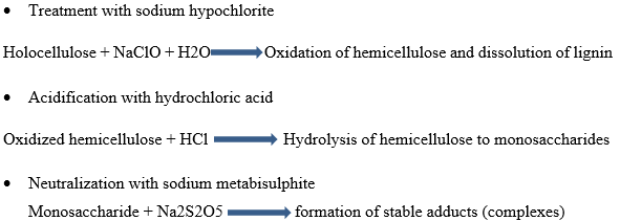
5. Holocellulose determination. 1g of sawdust was measured and put in a beaker .75mls of sodium hypochlorite and 25mls hydrochloric acid added and the PH adjusted to 4. It was allowed to boil for 90minutes. 100mls of sodium metabisulphite was added and allowed to boil for 15minutes. It was then filtered using a filter paper and rinsed with cold distilled water and then dried for 2hours.
The equations are as follows:
Scheme 3. Holocellulose content in sawdust
%Hollocellulose =Dry weightWet weight x100
2.3. Mechanical Strength of the Composites
2.3.1. Moulding
The samples were produce for 5% of sodium hydroxide palm kernel shell treatment to eliminate impurities and then sun dried it for 4 days. Three different sample compositions of twelve each were moulded with 40% of epoxy resin and PKS/wood dust content of 20/40, 25/35 and 30/30 for compressive strength, flexural strength, impact strength and water absorption rate tests. Epoxy resin and hardener was stirred for five minutes, PKS and wood dust was added to it and stirring continued for three minutes. Compaction was done by applying a compressive force of 8.3 KN. Demoulding after 8 hours was done by dismantling the mould assembly to remove the moulded samples. This process of moulding was done for the different formulations to obtain twelve samples per test to be carried out.
2.3.2. Compression Test
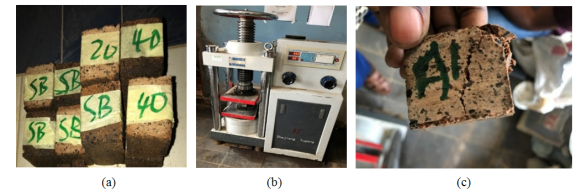
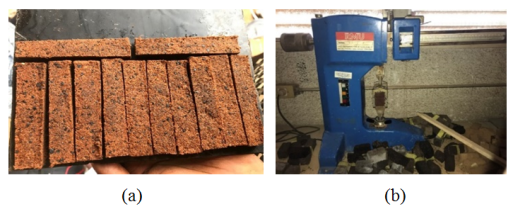
A mould of dimensions 40mm x 40mm x 40mm was used to produce specimen for compressive strength test. The compressive strength test was carried out using STYE-2000 compressive strength machine with serial number: CE463EPCY23. Figure 4 (a), (b) and (c) shows the compressive samples preparation and testing. The loading platen of the compression testing machine was cleaned and the sample was placed on the center of lower platen. The top platen of the compressive testing machine was carefully aligned ensuring that the loading platens were parallel to the specimen surfaces. The specimen was loaded continuously and without shock at the rate of 3.3 kN/s. The fracture shapes of the cubes were observed keenly. The failure load was recorded and the compressive strength determined using the formula.
Fc=PA
Where Fc=Compressive strength in MP
P= Failure force in KN
A=Area of the cube in mm2
Figure 4. (a) Compression test samples (b) Digital display hydraulic Compression testing machine and sample under test (c) Sample failure after compressive test.
2.3.3. Flexural Test
A mould of dimensions 160mm x 40mm x 40mm according to ASTM C78/C78M-18 was used to produce specimen for flexural strength test . The samples were mounted on a three-point loading automatic flexural machine. This machine used for the flexural strength determination of specimens of size 40x40x160 mm. The moulded specimen was mounted on the support span on its side with respect to its position as moulded and on the center of the support blocks. The flexural testing was carried out using RMU machine serial 1461288. Figure 5a and b illustrate the flexural samples preparation and testing.
Figure 5. (a) Flexural test samples (b) Automatic flexural testing machine.
The loading system was centred in relation to the applied force. The load-applying blocks were brought in contact with the surface of the specimen at the third points. Load was applied automatically by long-pressing the automatic button until the sample failed. The failure force in da N was read and recorded and the Flexural strength (flexural strength) calculated as follows:
σ=3FL2wd2
2.3.4. Impact Test
The mould of dimensions 40 mm x 15 mm X 4 mm was used to produced specimen for impact strength test. The specimen was mounted on the support fixture of the drop-weight machine. The fixture had a circular hole with a diameter of 25 mm at the center of the specimen. The fixture was rigidly attached to the base of the machine. The impact mass was set and height according to the desired impact energy level. The impact had a hemispherical nose with a diameter of 12.7 mm and a mass of 2.2 kg. The impact was released to fall freely onto the specimen. The impact force, displacement, and energy were recorded using the sensors and data acquisition system of the machine. The specimen was inspected for damage and the residual thickness measured at the center of the specimen using a micrometer. Previous Steps were repeated for all ten specimens per composition with the same impact energy level. The average and standard deviation of the absorbed energy, peak force, maximum displacement, and damage area for each impact energy level. The absorbed energy versus impact energy and peak force versus maximum displacement curves was plotted.
2.3.5. Water Absorption Test
Water absorption 66 hours/equilibrium ASTM D570-98 standard was used . Ten Samples sizes of 20x10 mm for each composition (SA, SB and SC) were used to determine the water absorption (WA). Samples masses before immersion were determined and recorded. The samples were immersed in distilled water for a total of 66 hours. Within the 66 hours, the samples were removed after every 6 hours one after the other, surface dried using a dry towel for reweighing with a balance of 0.01 g precision within one minute.
3. Results and Discussions
3.1. Moisture Content
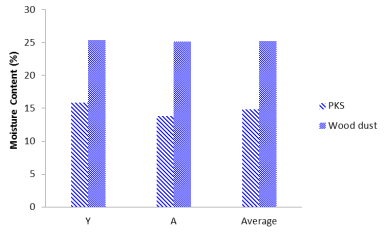
The moisture content of palm kernel shell (PKS) was determined to be 14.89% Figure 6, which is a critical parameter influencing its suitability for composite applications. Compared to the 21% moisture content reported for PKS used in energy generation , the lower value (14.89%) observed in this study suggests better stability for polymer composite fabrication. High moisture content in natural fibers can lead to poor interfacial adhesion with the polymer matrix, increased porosity, and reduced mechanical strength. Therefore, the relatively lower moisture content of PKS in this study is advantageous for composite production. In the case of wood dust (WD), the moisture content was measured at 25.27%, indicating a significant natural water absorption tendency. This high moisture content can adversely affect composite performance by: Reducing interfacial bonding with the epoxy resin, leading to weaker mechanical properties. Increasing dimensional instability due to swelling/shrinkage upon moisture exposure. Promoting fungal/mold growth, which can degrade the composite over time. Extending processing time, as additional drying may be required before composite fabrication. Previous studies on wood dust moisture content reported varying levels depending on wood species: 14.74% for Obuba red, 9.82% for Abura, 8.25% for Opepe/Mahogany, 9.25% for Iroko The 25.27% moisture content observed in this study is significantly higher than these reported values, suggesting that the wood dust used may require pre-treatment (e.g., drying, chemical modification, or coupling agents) to enhance compatibility with epoxy resin and minimize moisture-related defects in the final composite.
Figure 6. Moisture Content.
3.2. Apparent Density
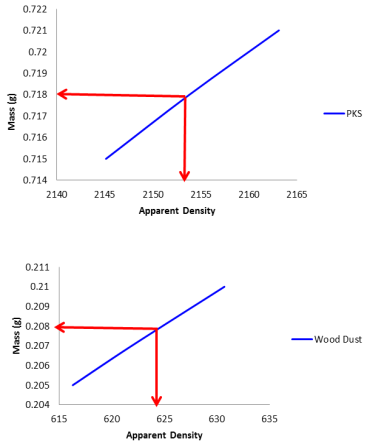
The apparent density of palm kernel shell (PKS) was determined to be 0.72 g/cm³ (equivalent to 720 kg/m³), as shown in Figure 7a. This value falls within the range of 600-740 kg/m³ reported by and matches exactly the 720 kg/m³ value reported by . However, it is notably higher than the 582.98 kg/m³ reported by . These variations of values may be attributed to several factors: Geographical origin and cultivation conditions of the palm trees, as noted by , Processing methods (grinding technique, particle size distribution) as discussed by Moisture content at time of testing, which affects bulk measurements The wood dust particles exhibited an apparent density of 0.21 g/cm³ (Figure 7b), indicating: High porosity structure where low density suggests significant void spaces between particles, which aligns with findings by for similar lignocellulosic materials. Processing implications may require higher compaction pressures during composite fabrication , Could lead to higher resin absorption requirements , Potential for increased void content in final composites . Handling characteristics might increase tendency for particle agglomeration , Greater dust formation during processing , Potential segregation issues in mixed-filler systems .
Figure 7. (a) Apparent density of PKS (b) Apparent density wood dust.
3.3. Specific Gravity
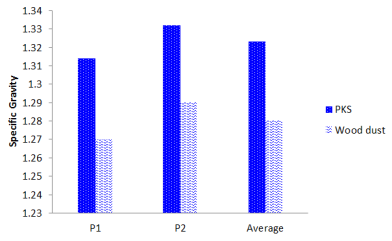
The specific gravity of palm kernel shell (PKS) and wood dust does not fall within the typical range for common rocks but exhibits porosity comparable to granite and limestone. Additionally, the specific gravity of these materials exceeds the minimum threshold of 1.0 (as shown in Figure 8), which is essential for asphalt properties . The specific gravity of PKS varies within a range of 1.17 to 1.62. reported the highest value of PKS specific gravity (1.62) during a study on its use for soil stabilization, while observed the lowest value (1.14) when analyzing PKS's structural applications documented a specific gravity of 1.40 for PKS. For wood dust, a specific gravity of 1.28 indicates that it is 1.28 times denser than water.
Figure 8. Specific Gravity.
3.4. Grain size Analysis
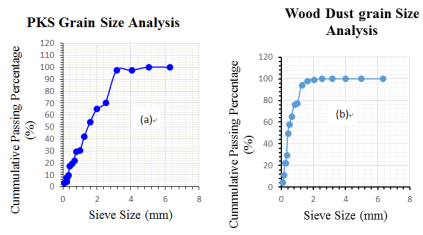
The particle size distribution of palm kernel shells (PKS), shown in Figure 9a, indicates that approximately 55–60% of the particles are medium or average-sized, comparable to sand particle sizes ranging from 0.315 mm to 1.25 mm. About 20–25% of the PKS particles fall within the fine size range of 0.08 mm to 0.25 mm. Lastly, 30–35% of the PKS particles are categorized as large-sized, with sizes varying between 1.6 mm and 2 mm. reported that the maximum aggregate size for PKS is 10 mm, while normal weight aggregates (NWA) have a maximum size of 14 mm. The combined particle sizes of PKS and NWA typically range between 5 mm and 15 mm, representing about 90% of the total aggregate. This aligns with findings by , who noted that PKS has a well-graded distribution suitable for use as a partial replacement for traditional aggregates. The particle size distribution of wood dust, depicted in Figure 9b, reveals that 20–25% of the particles are medium or average-sized, consistent with sand particle sizes of 0.315 mm to 1.25 mm. A majority, approximately 55–60%, are classified as fine particles, with sizes ranging from 0.08 mm to 0.25 mm. Finally, 15–20% of the wood dust particles fall within the large particle size category, with sizes between 1.6 mm and 2 mm. These findings are consistent with those of , who highlighted the fine and medium-sized nature of wood dust particles, which enhances their use in fine aggregate applications. The observed particle size distribution of PKS and wood dust supports their suitability for various construction purposes. emphasized the importance of well-graded aggregates for achieving optimal workability and strength in concrete mixes, while highlighted the potential of alternative aggregates, such as PKS and wood dust, to improve sustainability in construction materials.
Figure 9. (a) Grain size analysis PKS (b) Grain size analysis wood dust.
3.5. Equivalent Test
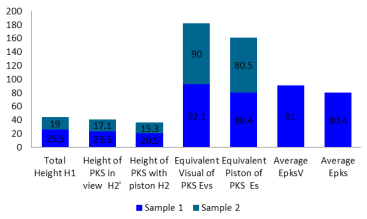
The PKS equivalent ranges from 80.4 to 92.1, with an average value of 91 (as shown in Figure 10). An approximation of 80.4 is considered the lower bound of this range. These values fall within the acceptable range, indicating that the PKS has minimal impurities, such as organic or inorganic contaminants, and is relatively clean. The high PKS equivalent suggests that the material is free from human waste or significant contamination from external activities. The cleanliness of PKS is critical for its application in construction and soil stabilization. Impurities such as organic compounds or waste residues can interfere with the bonding properties of PKS when used as a construction material . The observed range aligns with findings by , who noted that PKS with high cleanliness values demonstrates better performance in concrete mixes, enhancing strength and durability. Similarly, emphasized that a high PKS equivalent reflects minimal silt and clay content, which is vital for maintaining the integrity of aggregates in construction. Moreover, the absence of human waste-related impurities ensures that PKS can be safely and sustainably utilized in various applications. This aligns with , who reported that cleaner PKS aggregates contribute to improved workability and reduced water demand in concrete mixtures. The findings also support the potential of PKS as an eco-friendly alternative to traditional materials, as highlighted by , provided its cleanliness and quality are maintained during sourcing and processing.
Figure 10. Equivalent test of PKS.
3.6. Chemical Properties of Wood Dust
Wood dust was observed to have a water absorption rate of 76.72%, indicating that it absorbs approximately 76.72% of its weight in water. This high water absorption capacity reflects the porous nature of wood dust, which allows it to retain significant moisture. Such a property can impact its performance in construction or as reinforcement material, as excessive moisture retention may lead to dimensional instability and reduced durability under certain conditions . However, materials with high water absorption can also have advantages in applications like bio-based composites, where moisture interaction is utilized for bonding and processing . The lignin content of the wood dust was measured at 13.12%, indicating that approximately 13.12% of its composition consists of lignin. Lignin is a critical organic polymer in plant cell walls that provides structural support and rigidity. Its hydrophobic nature and resistance to biodegradation are significant factors influencing the material's durability and moisture resistance . A higher lignin content typically correlates with reduced moisture absorption and increased decay resistance, which aligns with findings , who emphasized lignin's role in enhancing the water resistance and stability of wood-based materials. The cellulose content was determined to be 24%, meaning that cellulose, a primary structural carbohydrate in plant cell walls, makes up nearly a quarter of the wood dust's composition. Cellulose is a key component responsible for the strength and rigidity of wood and other plant materials . Its crystalline structure imparts significant tensile strength to the wood dust, making it a valuable element in construction applications where mechanical strength is critical. Hemicellulose content in the wood dust was recorded at 30.1%, indicating that this complex carbohydrate constitutes a significant portion of the sample. Hemicellulose, alongside cellulose and lignin, contributes to the overall structural integrity of plant cell walls. Unlike cellulose, hemicellulose is amorphous and acts as a binding agent between cellulose fibers, enhancing flexibility and facilitating interactions among cell wall components . This characteristic can influence the thermal and mechanical behavior of wood dust when used in composite materials or thermal insulation applications. These compositional properties—water absorption, lignin, cellulose, and hemicellulose content—are critical for understanding the behavior of wood dust in various engineering applications. The interplay of these components determines the material's performance, particularly in moisture-laden environments, where the balance of rigidity, flexibility, and decay resistance is essential for long-term functionality . The chemical properties are presented on Table 5.
Table 5. Chemical properties of wood dust.

Chemical properties

Property

Wood Dust

Realated work

Reference

Water Absorption

76.72%

1.07-6.59%

Icduygu et al., (2013).

Lignin

13.12%

27.60-39.53%

Boadu et al., (2023)

Pectin

0

-

-

cellulose

24.00%

47.03-48.88 %

Boadu et al., (2023)

Hemicellulose

30.10%

14.98-18.61 %

Boadu et al., (2023)

Holocellulose

54.10%

-

-

3.7. Mechanical Strength of the PKS/Wood Dust Epoxy Resin Composite
3.7.1. Compressive Strength
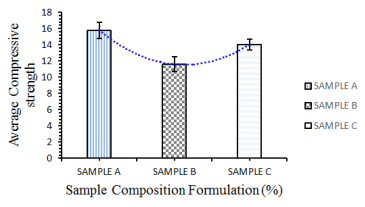
The compressive strength values were observed to increase with the rise in PKS content. The lowest compressive strength was recorded as 11.58 MPa in sample B (20% PKS and 40% wood dust WD), while the maximum compressive strength was 15.77 MPa in sample A (30% PKS and 30% WD). Sample C, with a composition of 25% PKS and 35% WD, exhibited a compressive strength of 14.03 MPa, as presented in Figure 11. The observed increase in compressive strength with higher PKS content is likely due to the greater volume fraction of PKS acting as reinforcement in the composite. PKS particles distribute and transfer applied loads effectively, improving the material’s structural integrity. This trend aligns with , who reported that the incorporation of reinforcing materials in composites enhances their compressive strength by increasing the reinforcement phase’s ability to bear loads. Similarly, observed a 15% improvement in compressive strength in epoxy resin composites when 3.1% Al2O3 and SiO2 nanoparticles were added. They attributed the enhancement to the effective loading and distribution of reinforcing particles, which minimized stress concentrations and improved overall load transfer. The behavior in the PKS-wood dust composite is comparable, as the distribution of PKS particles likely contributes to increased strength up to the optimum 30% PKS composition in sample A. However, it is essential to note that beyond certain thresholds, excessive reinforcement content can lead to agglomeration or reduced bonding between the matrix and reinforcement, potentially compromising strength . For this study, the optimal compressive strength was achieved at 30% PKS, suggesting a balance between adequate reinforcement and effective bonding within the composite matrix. These findings are consistent with the broader body of literature on natural and synthetic composites, which emphasizes the role of reinforcement content and distribution in determining mechanical properties. Similar trends in agricultural by-product composites, where optimized particle content led to improved compressive strength without compromising other properties .
Figure 11. Compressive strength test.
3.7.2. Flexural Strength
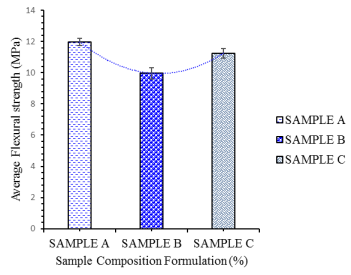
The flexural strength values were significantly enhanced with an increase in PKS content. The lowest flexural strength was recorded as 8.025 MPa in sample B (20% PKS and 40% WD), while the maximum flexural strength was observed at 11 MPa in sample A (30% PKS and 30% WD). Sample C, comprising 25% PKS and 35% WD, showed a flexural strength of 9 MPa, as presented in Figure 12. The observed trend of increasing flexural strength with a rise in PKS content can be attributed to the higher volume fraction of PKS, which serves as reinforcement in the composite matrix. This reinforcement helps in resisting bending stresses, enhancing the overall strength of the composite. reported that natural fillers and reinforcements, such as PKS, effectively distribute applied stresses and improve the mechanical properties of composite materials. Observed a similar trend in epoxy resin reinforced with nanoparticles, where a 3.1% addition of Al2O3 and SiO2 nanoparticles resulted in a 15% improvement in flexural strength. This improvement was attributed to the uniform dispersion of reinforcing particles, which optimized load distribution and minimized stress concentrations. In the PKS-wood dust composite, the flexural strength increase up to the optimal 30% PKS content in sample A suggests that PKS particles are effectively reinforcing the matrix and improving load-bearing capacity under bending. It is important to note that beyond a certain reinforcement content, flexural strength may plateau or decrease due to issues such as poor bonding, agglomeration of particles, or reduced matrix continuity . The results suggest that 30% PKS content strikes a balance between effective reinforcement and maintaining the matrix’s integrity, yielding the highest flexural strength in this study. Furthermore, the results align with findings , who highlighted the potential of agricultural by-product composites, like PKS, to improve flexural strength due to their structural properties and ability to bridge cracks under bending loads. This enhancement of flexural properties is a critical factor for applications in construction and other load-bearing environments where materials are subjected to bending stresses.
Figure 12. Flexural strength test.
3.7.3. Impact Strength
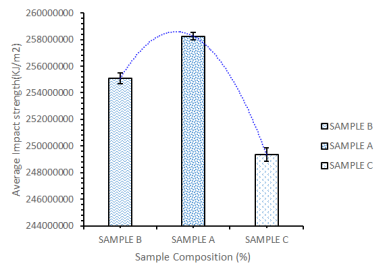
Sample A absorbed the highest energy during impact tests, followed by sample C, with sample B absorbing the least energy, as presented in Figure 13. This trend was consistently reflected in the computed values of impact strength, impact modulus, and impact stresses. The impact strength of the composites increased with a rise in PKS content and decreased with higher wood dust (WD) content. Specifically, sample A (30% PKS and 30% WD) demonstrated the highest impact resistance, while sample B (20% PKS and 40% WD) exhibited the lowest. Sample C (35% PKS and 25% WD) fell in between, highlighting the significant influence of composite composition on impact performance. The increase in PKS content provided the composites with greater resistance to impact loading due to the role of PKS as reinforcement. PKS particles enhance the material's toughness by absorbing and dissipating impact energy more effectively, thereby reducing the likelihood of catastrophic failure under sudden loads. This observation aligns with , who found that the inclusion of reinforcing particles in natural fiber composites significantly improves impact strength and energy absorption capacity. Toughness, as a material property, is directly influenced by the reinforcement's ability to bridge cracks and distribute stresses under impact conditions. Conversely, the increased WD content and reduced PKS content in sample B resulted in decreased impact strength. This is likely due to the reduced proportion of reinforcement within the matrix, leading to diminished toughness and increased brittleness. Composites with higher WD content may lack the structural integrity provided by PKS, making them more susceptible to failure under impact loading. highlighted that the composition of composites significantly impacts their mechanical properties, including impact resistance. Excessive filler content, such as WD, may lead to weak bonding between the particles and the matrix, reducing the composite’s ability to absorb and dissipate energy efficiently. Furthermore, the findings in this study are consistent with broader trends in composite research. emphasized that the mechanical properties of agricultural by-product composites, such as impact resistance, are highly dependent on the balance between reinforcement and filler content. Optimizing the composition, as observed in sample A, is crucial for achieving a favorable balance between toughness and stiffness.
Figure 13. Impact strength test.
3.7.4. Water Absorption
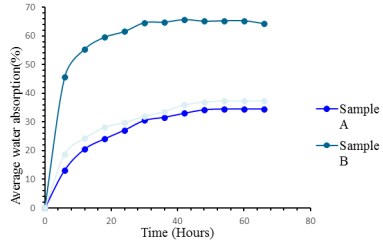
The water absorption of the composites was observed to increase with higher wood dust (WD) content. The absorption process exhibited three distinct phases: an initial rapid absorption within the first six hours, a slower absorption rate between the 12 and 48 hour, and a saturation phase beyond 48 hours, where no significant changes in water absorption were observed. The maximum water absorption was measured as 34.53% for sample A (30% PKS: 30% WD), 64.28% for sample B (20% PKS: 40% WD), and 37.31% for sample C (25% PKS: 35% WD), as presented in Figure 14. Sample B demonstrated the highest water absorption, followed by sample C, while sample A exhibited the lowest absorption among the composites. This pattern can be attributed to the increased WD content in the composites, which correlates with higher porosity and the hydrophilic nature of wood dust particles. The cellulose and hemicellulose structures in WD contain free hydroxyl (-OH) groups, which interact with water molecules via hydrogen bonding, increasing water uptake. The higher the WD content, the more polar -OH groups are available, leading to greater water absorption. This observation aligns with findings by , who reported a similar trend in polypropylene composites reinforced with wood dust. Increased wood fiber content led to higher water absorption due to the hydrophilic nature of natural fibers, which contrasts with the hydrophobic properties of the polymer matrix. Additionally, water can enter the composite through interfacial regions, where it forms hydrogen bonds with the free hydroxyl groups of cellulosic molecules. Moreover, observed comparable behavior in composites reinforced with sisal and pineapple leaf fibers (PALF), noting that increased natural fiber content resulted in elevated water absorption due to the porous structure and hydrophilic nature of the fibers. This behavior is a critical consideration for composite applications, particularly in environments exposed to moisture, as water absorption can affect mechanical properties and dimensional stability. The relatively lower water absorption in sample A compared to the other samples suggests that the higher PKS content reduces the hydrophilic effects of WD by limiting the number of available -OH groups. PKS, as a more hydrophobic reinforcement, acts to counterbalance the hydrophilicity of WD, thereby reducing overall water absorption. This highlights the importance of optimizing composite composition to achieve desirable water absorption characteristics for specific applications.
Figure 14. Water absorption test.
4. Conclusions
This study investigated the influence of palm kernel shell (PKS) and wood dust on the mechanical properties of epoxy resin composites. The results led to the following conclusions: The physical properties of PKS and wood dust were as follows: moisture content of 14.89% for PKS and 25.27% for wood dust, specific gravity of 1.323 for PKS and 1.28 for wood dust, apparent density of 0.72 g/mL for PKS and 0.21 g/mL for wood dust, and grain sizes ranging from 0.315 mm to 2 mm for both materials. The equivalent test value for PKS was 80.4%. In terms of chemical properties, wood dust exhibited a water absorption of 76.72%, a lignin content of 13.12%, no pectin, a cellulose content of 24.0%, and a hemicellulose content of 30.1%. The results showed significant improvements in mechanical properties with the incorporation of up to 30% PKS and 30% wood dust. The highest performance was observed in the composite with 30% PKS and 30% wood dust, yielding a maximum compressive strength of 15.77 MPa, maximum flexural strength of 11 MPa, and maximum impact strength of 258 × 10⁹ kJ/m². This formulation also demonstrated the lowest water absorption of 14.51%. Overall, the mechanical and physical performance of the composites indicated that composition formulation A (30% PKS, 30% wood dust, and 40% epoxy resin) was the optimal choice. This formulation not only satisfied the minimum breaking strength requirement of 12 N/mm² for wall tiles, as reported by , but also demonstrated lightweight properties, making it suitable for use as wall tiles.
Abbreviations

PKS

Palm Kernel Shell

WD

Wood Dust

NWA

Normal Weight Aggregates

Mw

Mass of Water,

WA

Water Absorption

PALF

Pineapple Leaf Fibers,

Author Contributions
Yakum Reneta Nafu: Conceptualization, Methodology, Supervision, Writing – original draft
Nemlen Silas Yuyoh: Data curation, Investigation, Writing – review & editing
Tsi Evaristus Angwafo: Methodology, Resources, Supervision
Ndimumeh Flevis Apoawenjuo: Formal Analysis, Software, Writing – review & editing
Conflicts of Interest
The authors declare no conflicts of interest.
References
[1] Faruk, O., Bledzki, A. K., Fink, H. P., & Sain, M. (2012). Biocomposites reinforced with natural fibers: 2000–2010. Progress in Polymer Science, 37(11), 1552–1596.
[2] Akinwekomi, A. D., Akinlabi, E. T., & Jen, T.-C. (2021). Mechanical and thermal properties of epoxy resin composites reinforced with palm kernel shell particles. Journal of Materials Research and Technology, 15, 2754–2766.
[3] Omoniyi, T. E., Akinwekomi, A. D., & Lawal, S. A. (2019). Mechanical and water absorption behaviour of palm kernel shell particulate reinforced epoxy composites. Journal of King Saud University - Engineering Sciences, 31(3), 296–304.
[4] Adekunle, K. F., Ibitoye, S. A., Aliu, S. A., & Omoniyi, T. E. (2013). Mechanical properties of palm kernel shell particulate reinforced polyester composites. Journal of Applied Polymer Science, 127(3), 1931–1936.
[5] Oladele, I. O., Omotosho, T. F., & Adediran, A. A. (2020). Modified palm kernel shell fiber/particulate cassava peel hybrid reinforced epoxy composites. Journal of King Saud University - Engineering Sciences, 32(1), 11–17.
[6] Ndapeu, D., Ndi, J. N., & Tchekwagep, P. M. S. (2020). Quantification and characterization of palm kernel shells for energy production in Cameroon. Biomass Conversion and Biorefinery, 10(3), 621–632.
[7] Kumar, R., Kumar, K., & Bhowmik, S. (2020). Enhancement of tensile and flexural properties of epoxy composite reinforced by optimized wood dust particles. Journal of Natural Fibers, 17(12), 1779–1792.
[8] Sahu, P., Gupta, M. K., & Srivastava, R. K. (2018). Surface modification of wood dust and its effect on the mechanical and thermal properties of epoxy composites. Journal of Applied Polymer Science, 135(24), 45382.
[9] Ashori, A., & Nourbakhsh, A. (2010). Reinforced polypropylene composites: Effects of chemical compositions and particle size. Bioresource Technology, 101(7), 2515-2519.
[10] Bernie, J., Nkemnyi, F., & Tarla, N. (2019). Forest conservation and economic development in Cameroon: Challenges and opportunities. African Journal of Environmental Science and Technology, 13(4), 145-156.
[11] Abdulwahab, M., Ogunbode, E. B., & Ismaila, S. O. (2022). Mechanical and physical properties of hybrid palm kernel shell-wood dust reinforced epoxy composites. Journal of Materials Research and Technology, 18, 4561–4572.
[12] Chowdhury, S. R., Das, P. P., & Kumar, V. (2021). Mechanical and thermal characterization of hybrid natural fiber reinforced polymer composites: A comprehensive review. Journal of Reinforced Plastics and Composites, 40(15-16), 555-573.
[13] Omotoyinbo, J. A., & Olorunleye, O. O. (2019). Mechanical properties of epoxy composites reinforced with hybrid palm kernel shell and coconut shell particles. Journal of King Saud University - Engineering Sciences, 31(3), 235-241.
[14] Aigbodion, V. S., Ezema, I. C., & Akinlabi, E. T. (2020). Development of hybrid palm kernel shell/wood dust reinforced epoxy composites for structural applications. Journal of Materials Research and Technology, 9(6), 15173–15183.
[15] John, M. J., Anandjiwala, R. D., & Mwaikambo, L. Y. (2019). Surface modification of palm kernel shell particles and their reinforcement in polymer composites. Journal of Polymers and the Environment, 27(5), 1069-1078.
[16] Singh, T., Patnaik, A., & Gangil, B. (2020). Effect of chemical treatment on thermal and mechanical behavior of wood dust reinforced epoxy composite. Polymer Composites, 41(8), 3305-3316.
[17] Ajith, G., Rajesh, M., & Pitchayyapillai, P. (2023). Optimization of filler loading in natural fiber reinforced polymer composites: Balancing mechanical properties and processability. Journal of Cleaner Production, 384, 135487.
[18] Tan, L. H., Lim, C. P., & Yeo, S. Y. (2022). Particle size and dispersion effects on mechanical properties of particulate-reinforced polymer composites: Experimental and micromechanical analysis. Composites Science and Technology, 228, 109634.
[19] Sreekala, M. S., Kumaran, M. G., & Thomas, S. (2002). Water sorption in oil palm fiber reinforced phenol formaldehyde composites. Composites Part A: Applied Science and Manufacturing, 33(6), 763-777.
[20] Obiukwu, O. A., Okafor, C. E., & Ibekwe, J. O. (2021). Optimization of palm kernel shell/wood dust hybrid reinforcement in epoxy composites for structural applications. Journal of Materials Research and Technology, 15, 4867–4880.
[21] Ishak, M. R., Sapuan, S. M., Leman, Z., Rahman, M. Z. A., & Anwar, U. M. K. (2013). Characterization of sugar palm (Arenga pinnata) fibers and their composites. Journal of Reinforced Plastics and Composites, 32(16), 1194-1203.
[22] Bledzki, A. K., & Gassan, J. (1999). Composites reinforced with cellulose-based fibres. Progress in Polymer Science, 24(2), 221–274.
[23] Oladele, I. O., Ibrahim, I. O., Adediran, A. A., Akinwekomi, A. D., & Talabi, S. I. (2020). Modified palm kernel shell reinforced epoxy composites: Effects of particle size and loading on mechanical properties. Journal of Composites Science, 4(3), 126.
[24] Kumar, R., Singh, R., Ahuja, I. P. S., & Farina, I. (2017). Mechanical and thermal characterization of wood dust-filled epoxy composites for structural applications. Journal of Thermoplastic Composite Materials, 30(12), 1691–1708.
[25] Adekunle, K. F., Okolie, J. A., Oyelakin, O. R., & Omodehin, R. A. (2013). Effect of alkali treatment on the water absorption capacity of palm kernel shell (PKS) particles. Journal of Reinforced Plastics and Composites, 32(11), 745-750.
[26] Ashori, A., & Nourbakhsh, A. (2010). Bioresource Technology, 101(7), 2515-2519.
[27] Aigbodion, V. S., Ezema, I. C., & Adesina, O. S. (2020). Development of hybrid palm kernel shell/wood dust epoxy composites: Mechanical, thermal, and water absorption properties. Journal of Materials Research and Technology, 9(6), 14267-14276.
[28] ASTM, I.S (2004). Annual Book of ASTM Standards. ASTM International Standards Worldwide, 04(09): 12-29.
[29] ASTM International. (2018). Standard test method for flexural strength of concrete (using simple beam with third-point loading) (ASTM C78/C78M-18). West Conshohocken, PA: ASTM International.
[30] ASTM International. (1998). Standard test method for water absorption of plastics (ASTM D570-98). West Conshohocken, PA: ASTM International.
[31] Onyechi, P. C., Igbokwe, P. K., & Nwakaire, J. N. (2019). Evaluation of palm kernel shells as sustainable energy source: Proximate analysis, calorific value, and combustion characteristics. Renewable Energy, 136, 713-719.
[32] Ikenyiri, P. N., Okoro, U. C., & Ogah, A. O. (2019). Variations in physical and mechanical properties of selected wood species in Nigeria. Journal of Forestry Research and Management, 16(2), 45-58.
[33] Elinwa, A. U. (2018). Characterization and use of biomass ash as a pozzolanic material for cement replacement. Nigerian Journal of Technology, 37(3), 629–634.
[34] Fono-Tamo, R. S., Koya, O. A., & Fono-Tamo, I. S. (2014). A study on the properties of periwinkle shell ash (PSA) blended cement concrete. Journal of Materials Science Research, 3(4), 51–62.
[35] Mutuku, R. N., Mwero, J. N., & Kabubo, J. K. (2017). Mechanical properties of sisal fibre-reinforced polymer composite cement panels. Journal of Sustainable Construction Materials and Technologies, 2(2), 36–45.
[36] Akinyemi, A. B., Dai, C., & Omoniyi, T. E. (2020). Performance of cement-bonded composites made from tropical hardwoods: Effect of water repellents and zinc borate addition on fungal resistance. Construction and Building Materials, 243, 118269.
[37] Asasutjarit, C., Charoenvai, S., Hirunlabh, J., & Khedari, J. (2019). Materials and mechanical properties of pretreated coir-based green composites. Composites Part B: Engineering, 173, 106968.
[38] Rowell, R. M. (2012). Handbook of wood chemistry and wood composites (2nd ed.). CRC Press.
[39] Tajvidi, M., Gardner, D. J., & Bousfield, D. W. (2016). Cellulose nanomaterials as binders: Laminate and particulate systems. Composites Part A: Applied Science and Manufacturing, 85, 1–9.
[40] Stark, N. M., Matuana, L. M., & Clemons, C. M. (2010). Effect of processing method on surface and weathering characteristics of wood-flour/HDPE composites. Polymer Composites, 31(8), 1329–1339.
[41] Bledzki, A. K., Fink, H.-P., & Specht, K. (2002). Unidirectional hemp and flax EP- and PP-composites: Influence of defined fiber treatments. Applied Composite Materials, 9(1), 1-12.
[42] Madsen, B., & Gamstedt, E. K. (2013). Wood versus plant fibers: Similarities and differences in composite applications. Journal of Materials Science, 48(4), 1535-1544.
[43] Klyosov, A. A. (2007). Wood-plastic composites. John Wiley & Sons.INC. PUBLICATION.
[44] Iwakiri, S., Prata, J. G., Trianoski, R., & Cunha, A. B. (2018). Evaluation of dust formation in the machining of five wood species from planted forests in Brazil. Acta Scientiarum. Technology, 40(1), e36010.
[45] Pickering, K. L., Efendy, M. G. A., & Le, T. M. (2016). A review of recent developments in natural fibre composites and their mechanical performance. Composites Part A: Applied Science and Manufacturing, 83, 98–112.
[46] Anuar, K. A., Razali, N., Salleh, F. M., & Ismail, H. (2017). Comparative analysis of porosity and specific gravity in materials for construction. Construction and Building Materials, 151, 938-945.
[47] Ndoke, P. N. (2006). The use of palm kernel shell in soil stabilization: A case study. Journal of Engineering and Applied Sciences, 1(2), 45-52.
[48] Okpala, D. C. (1990). Palm kernel shell as a lightweight aggregate in structural concrete. International Journal of Cement Composites and Lightweight Concrete, 12(3), 151-158.
[49] Azunna, P. N. (2019). Utilization of palm kernel shell for civil engineering applications. Nigerian Journal of Technology (NIJOTECH), 38(4), 1023–1031.
[50] Adewale, B. A., Olutoge, F. A., & Aina, O. (2020). Comparative analysis of particle size distribution in agricultural by-products for construction applications. Construction and Building Materials, 258, 119578.
[51] Olutoge, F. A., Adesina, P. A., & Aina, O. (2012). Investigating the particle size distribution of PKS as a partial replacement for fine aggregates. International Journal of Scientific & Engineering Research, 3(9), 1-7. ISSN 2229-5518.
[52] Neville, A. M. (2011). Properties of concrete (5th ed.). Pearson Education Limited.
[53] Smith, M. R., & Collis, L. (Eds.). (2001). Aggregates: Sand, gravel, and crushed rock aggregates for construction purposes (3rd ed.). Geological Society, London, Engineering Geology Special Publications, Vol. 17.
[54] Sarkanen, K. V., & Ludwig, C. H. (1971). Lignins: Occurrence, Formation, Structure and Reactions. Wiley-Interscience (New York) 978-0-471-75422-0.
[55] Fengel, D., & Wegener, G. (1989). Wood: Chemistry, Ultrastructure, Reactions. Walter de Gruyter. Walter de Gruyter (Berlin, New York) 3-11-012059-3.
[56] Paknia, A., Pramanik, A., Dixit, A., & Chattopadhyaya, S. (2016). Mechanical properties of natural fiber composites. Journal of Composite Materials, 50(8), 1101-1112.
[57] Bharadwaja, S. S., Kumar, A., Patel, V. K., & Gupta, M. (2023). Enhancement of epoxy resin properties using nanoparticle reinforcements. Composites Science and Technology, 232, 109876.
[58] Akter, S., Uddin, M. H., Islam, M. S., & Hossain, M. K. (2021). Influence of natural fiber content on the impact resistance of composites. Journal of Reinforced Plastics and Composites, 40(15-16), 621-635.
[59] Fakhrudi, Y. A., Faidzin, K. N., & Bisono, R. M. (2023). Effect of composite composition on mechanical properties of banana fiber composites with epoxy matrix for functional materials. International Journal of Science, Engineering and Information Technology, 6(2), Article 15804.
[60] Eyasu, D. (2020). Effect of wood dust content on water absorption properties of polypropylene composites. Journal of Composite Materials, 54(3), 375-385.
[61] Booramurthy, T., et al. (2023). Water absorption behavior of natural fiber-reinforced composites: A case study with sisal and pineapple leaf fibers. Journal of Natural Fibers, 20(1), 123-145.
[62] Amin, M. H., El-Feky, M. S., Hashem, F. S., & Kohail, M. (2019). Performance of ceramic wall tiles incorporating pozzolanic materials: Mechanical, durability, and sustainability assessment. Construction and Building Materials, 219, 356–367.
Cite This Article
  • APA Style

    Nafu, Y. R., Yuyoh, N. S., Angwafo, T. E., Apoawenjuo, N. F. (2025). Influence of Palm Kernel Shell/Wood Dust on Mechanical Properties with Epoxy Resin Composites. Composite Materials, 9(1), 28-45. https://doi.org/10.11648/j.cm.20250901.13

    Copy | Download

    ACS Style

    Nafu, Y. R.; Yuyoh, N. S.; Angwafo, T. E.; Apoawenjuo, N. F. Influence of Palm Kernel Shell/Wood Dust on Mechanical Properties with Epoxy Resin Composites. Compos. Mater. 2025, 9(1), 28-45. doi: 10.11648/j.cm.20250901.13

    Copy | Download

    AMA Style

    Nafu YR, Yuyoh NS, Angwafo TE, Apoawenjuo NF. Influence of Palm Kernel Shell/Wood Dust on Mechanical Properties with Epoxy Resin Composites. Compos Mater. 2025;9(1):28-45. doi: 10.11648/j.cm.20250901.13

    Copy | Download

  • @article{10.11648/j.cm.20250901.13,
      author = {Yakum Reneta Nafu and Nemlen Silas Yuyoh and Tsi Evaristus Angwafo and Ndimumeh Flevis Apoawenjuo},
      title = {Influence of Palm Kernel Shell/Wood Dust on Mechanical Properties with Epoxy Resin Composites},
      journal = {Composite Materials},
      volume = {9},
      number = {1},
      pages = {28-45},
      doi = {10.11648/j.cm.20250901.13},
      url = {https://doi.org/10.11648/j.cm.20250901.13},
      eprint = {https://article.sciencepublishinggroup.com/pdf/10.11648.j.cm.20250901.13},
      abstract = {The enormous quantity of palm kernel shell (PKS) and wood dust released in the environment as byproduct of wood processing and oil processing respectively, poses a major threat to the environment through land, water and air pollution during the local waste handling methods of dumping and burning of these byproducts. This study aimed at investigates the influence of waste palm kernel shell/wood dust with epoxy resin. Physical properties of PKS and wood dust, chemical compositions of wood dust and mechanical characterization of it composites were carried out. Palm kernel shell were pretreated with hot distill water at 1000C with 5% sodium Hydroxide (NAOH) to eliminate impurities and then sun dried it for 4 days. The physical properties of PKS and wood dust; moisture content, apparent density, specific gravity and grain size distribution and PKS equivalent test were conducted. Chemical properties such as cellulose, lignin, pectin, hemicellulose contents for wood dust were investigated. Three different sample composition of twelve each was moulded with 40% of epoxy resin and PKS/wood dust content of 20/40, 25/35 and 30/30. Compressive strength, flexural strength, impact test and Water absorption rate were determined. It was observed that the PKS/wood dust that the averages of moisture content, apparent density, specific gravity and fineness modulus were 14.89%/25.27%, 0.72 gmL-3/0.21 gmL-3, 1.323/1.28 and 58.4/33.29 respectively with average PKS equivalent of 80.4%. The results showed that the compressive strength, flexural strength and impact strength were 11.58-15.77 MPa, 8.03-10.99 MPa and 249-258×〖10〗^6 KJ/m^2 respectively and water absorption was 13.22-64.79%. The minimum strength was observed at 20/40 while the maximum strength was observed at 30/30 content. PKS/wood dust with epoxy resin composite can promote the use local materials in building construction as wall tiles.},
     year = {2025}
    }
    

    Copy | Download

  • TY  - JOUR
    T1  - Influence of Palm Kernel Shell/Wood Dust on Mechanical Properties with Epoxy Resin Composites
    AU  - Yakum Reneta Nafu
    AU  - Nemlen Silas Yuyoh
    AU  - Tsi Evaristus Angwafo
    AU  - Ndimumeh Flevis Apoawenjuo
    Y1  - 2025/06/26
    PY  - 2025
    N1  - https://doi.org/10.11648/j.cm.20250901.13
    DO  - 10.11648/j.cm.20250901.13
    T2  - Composite Materials
    JF  - Composite Materials
    JO  - Composite Materials
    SP  - 28
    EP  - 45
    PB  - Science Publishing Group
    SN  - 2994-7103
    UR  - https://doi.org/10.11648/j.cm.20250901.13
    AB  - The enormous quantity of palm kernel shell (PKS) and wood dust released in the environment as byproduct of wood processing and oil processing respectively, poses a major threat to the environment through land, water and air pollution during the local waste handling methods of dumping and burning of these byproducts. This study aimed at investigates the influence of waste palm kernel shell/wood dust with epoxy resin. Physical properties of PKS and wood dust, chemical compositions of wood dust and mechanical characterization of it composites were carried out. Palm kernel shell were pretreated with hot distill water at 1000C with 5% sodium Hydroxide (NAOH) to eliminate impurities and then sun dried it for 4 days. The physical properties of PKS and wood dust; moisture content, apparent density, specific gravity and grain size distribution and PKS equivalent test were conducted. Chemical properties such as cellulose, lignin, pectin, hemicellulose contents for wood dust were investigated. Three different sample composition of twelve each was moulded with 40% of epoxy resin and PKS/wood dust content of 20/40, 25/35 and 30/30. Compressive strength, flexural strength, impact test and Water absorption rate were determined. It was observed that the PKS/wood dust that the averages of moisture content, apparent density, specific gravity and fineness modulus were 14.89%/25.27%, 0.72 gmL-3/0.21 gmL-3, 1.323/1.28 and 58.4/33.29 respectively with average PKS equivalent of 80.4%. The results showed that the compressive strength, flexural strength and impact strength were 11.58-15.77 MPa, 8.03-10.99 MPa and 249-258×〖10〗^6 KJ/m^2 respectively and water absorption was 13.22-64.79%. The minimum strength was observed at 20/40 while the maximum strength was observed at 30/30 content. PKS/wood dust with epoxy resin composite can promote the use local materials in building construction as wall tiles.
    VL  - 9
    IS  - 1
    ER  - 

    Copy | Download

Author Information
  • Department of Mechanical Engineering, Higher Technical Teacher Training College Bambili, The University of Bamenda, Bamenda, Cameroon; Laboratory of Mechanics and Adapted Materials (LAMMA), University of Douala, Douala, Cameroon; Department of Mechanical and Industrial Engineering, National Higher Polytechnic Institute, The University of Bamenda, Bamenda, Cameroon
  • Department of Forestry and Wildlife Technology, College of Technology, The University of Bamenda, Bamenda, Cameroon

  • Department of Mechanical Engineering, Higher Technical Teacher Training College Bambili, The University of Bamenda, Bamenda, Cameroon; Department of Forestry and Wildlife Technology, College of Technology, The University of Bamenda, Bamenda, Cameroon

  • Department of Mechanical Engineering, Higher Technical Teacher Training College Bambili, The University of Bamenda, Bamenda, Cameroon; Department of Mechanical and Industrial Engineering, National Higher Polytechnic Institute, The University of Bamenda, Bamenda, Cameroon

  • Abstract
  • Keywords
  • Document Sections

    1. 1. Introduction
    2. 2. Materials and Method
    3. 3. Results and Discussions
    4. 4. Conclusions
    Show Full Outline
  • Abbreviations
  • Author Contributions
  • Conflicts of Interest
  • References
  • Cite This Article
  • Author Information